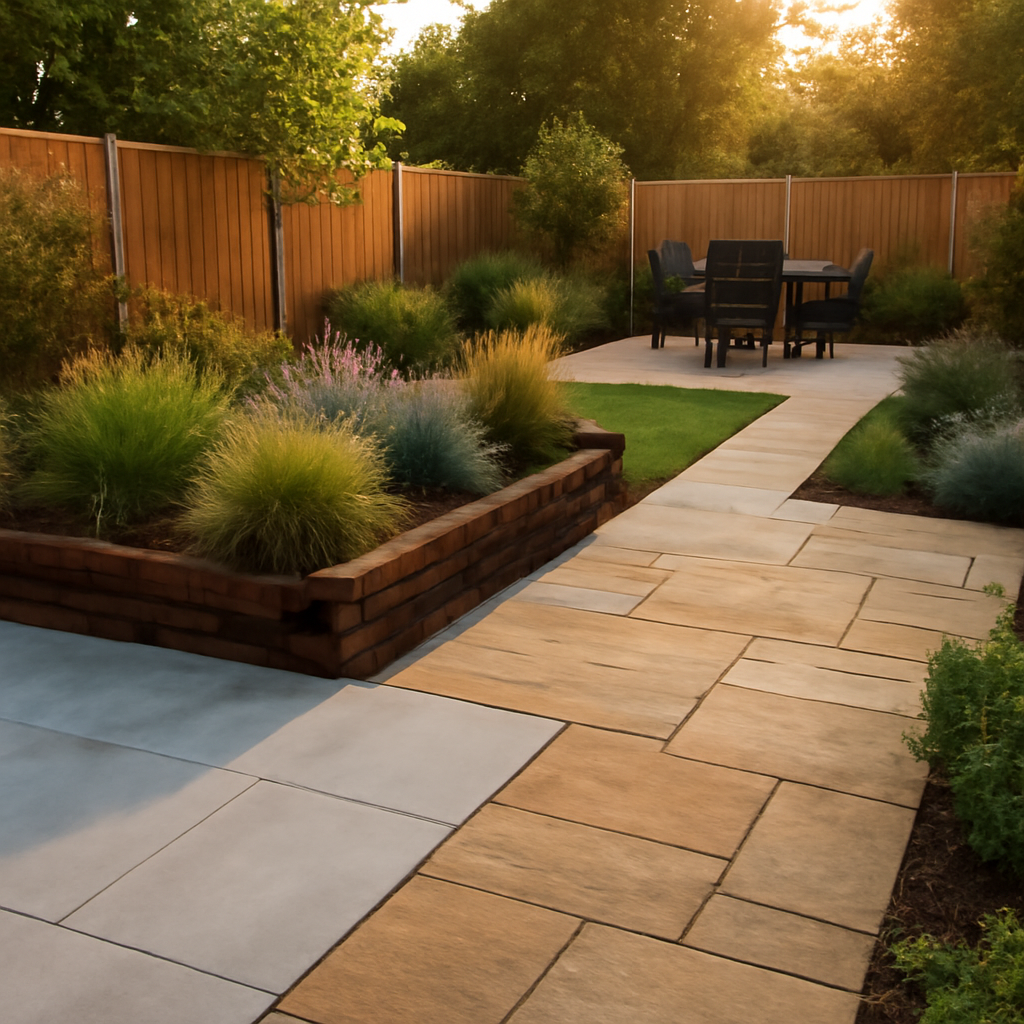
When planning a garden patio or hard landscaping project in Loughborough or the wider East Midlands, choosing the right paving material is crucial. Porcelain paving and Indian sandstone are two popular choices each with distinct advantages. Understanding their differences will help you decide what best suits your garden's style, budget, and local conditions.
Cost is often the first consideration. Indian sandstone patios typically range from £90 to £120 per square metre for straightforward installations on normal ground. Porcelain paving tends to be a bit more expensive, averaging between £110 and £150 per square metre. The higher porcelain cost comes from the material itself and preparation, including cutting and ensuring proper falls. Remember, these are guide prices: your final quote will depend on site access, landscaping levels, drainage needs and clearance.
Grip underfoot and safety are important, especially in wet or frosty weather common in the East Midlands. Indian sandstone tends to offer a naturally textured surface, providing decent grip even when damp. Porcelain can be very smooth, though manufacturers often produce textured options to improve slip resistance. If safety and grip are top priorities, discuss specific porcelain ranges or opt for sandstone with a honed or slightly rough finish.
Frost resistance is another area to consider given the East Midlands climate. Porcelain paving is highly frost resistant and doesn’t absorb water easily, reducing the risk of cracking in freeze-thaw conditions. Indian sandstone is generally frost resistant but is porous and may require sealing to prevent water absorption and freeze damage over time. Regular maintenance and sealing are advisable for sandstone patios to prolong their life.
Cleaning and maintenance requirements differ too. Porcelain paving is non-porous, meaning it resists staining and is easy to clean with just water and mild detergent. Indian sandstone’s porous nature makes it more prone to moss, algae and stains, so regular cleaning and sealing every few years is recommended. If low maintenance is a priority, porcelain may be the better pick.
Colour consistency can influence the overall look of your garden. Porcelain paving is manufactured, offering consistent colour and texture across all slabs. Indian sandstone is a natural stone, so each piece varies in shade and veining, creating a unique and often more rustic appearance. If you prefer a uniform look, porcelain is ideal; for natural character, Indian sandstone excels.
Choosing between these materials also depends on the garden style and your personal taste. Porcelain suits modern, clean-lined designs with its sleek finish, while Indian sandstone fits traditional or country garden looks nicely. Both materials work well with other landscaping features like railway sleeper raised beds or block paving driveways, allowing for varied textures throughout your outdoor space.
For a precise cost and material recommendation tailored to your East Midlands garden, a site visit is invaluable. Factors such as ground levels, drainage solutions, access for machinery and clearance all impact the final price and installation approach. Worthington Landscape & Design offers expert advice and quotations after a thorough on-site assessment.
If you’re considering a new patio or hard landscaping project around Loughborough, and want to weigh porcelain paving vs Indian sandstone, feel free to reach out. I can provide a quick quote or arrange a site visit to discuss options in detail. WhatsApp Aaron on 07454 978031 for an informal chat or quote.
WhatsApp Aaron on 07454 978031 to talk through a garden project.