When planning a garden upgrade in Loughborough or the wider East Midlands, choosing the right patio material is an important decision. Two popular options are porcelain paving and Indian sandstone. Each material offers distinct benefits and drawbacks in terms of cost, grip, frost resistance, maintenance, and appearance. Here, we'll break down what you can expect from both to help you decide which suits your garden best.
Cost is often a key consideration. Indian sandstone patios typically cost between £90 and £120 per square metre, including installation for straightforward sites with normal ground conditions. Porcelain paving tends to be pricier, ranging from £110 to £150 per square metre. The final porcelain price depends on slab choice, cutting complexity, ground preparation and drainage needs. Always keep in mind that site specifics like access, levels, and clearance can affect pricing for both materials.
Grip is another important aspect to consider, especially in the East Midlands where wet weather is common. Indian sandstone generally offers a naturally textured surface, providing good slip resistance. Porcelain paving's grip depends on the surface finish of the slabs chosen. Some porcelain options are highly polished and can be slippery when wet, so it’s crucial to select a slip-resistant finish if safety is a priority.
Regarding frost resistance, both porcelain and Indian sandstone hold up well to East Midlands winters but in different ways. Porcelain is non-porous, meaning it absorbs very little water. This makes it highly frost resistant as it’s less prone to frost damage or cracking. Indian sandstone, being natural stone, is more porous and requires sealing to improve its frost resistance and prevent staining. Proper maintenance helps prolong its lifespan in colder months.
Maintenance and cleaning are practical factors in day-to-day garden life. Porcelain paving is generally easier to clean due to its smooth, non-porous surface – a simple sweep and occasional wash usually suffice. Indian sandstone requires more attention, as it can collect dirt and algae in textured areas and benefits from regular sealing to keep it looking its best.
Colour consistency varies widely between the two. Indian sandstone features natural variations that lend character and a traditional look, making each patio unique. Porcelain paving provides consistent, uniform colour and finish, which suits modern garden designs or when matching specific colour schemes.
When to choose each material largely depends on your garden’s style, use, and maintenance preference. Indian sandstone suits naturalistic and rustic garden aesthetics and is ideal if you value a traditional look and don’t mind occasional upkeep. Porcelain paving fits contemporary gardens or areas where durability, easy cleaning, and uniform appearance are priorities.
At Worthington Landscape & Design, we understand East Midlands landscaping challenges and tailor solutions to your site. We’re happy to discuss porcelain paving vs Indian sandstone options on a site visit to assess access, levels, drainage and prepare a detailed quote based on your garden’s specifics.
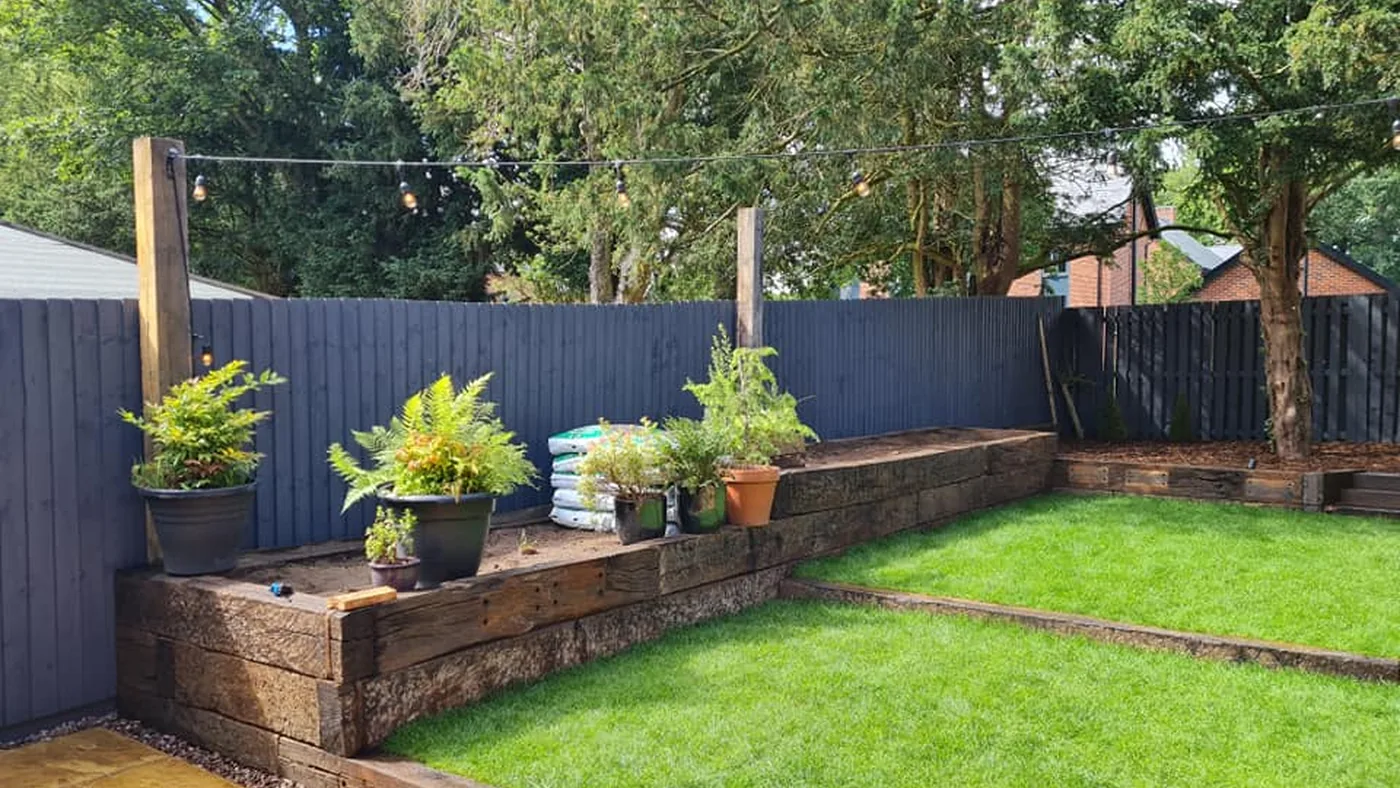
If you’re considering patios, 3D garden design, railway sleeper beds or other landscaping in Loughborough or the East Midlands, please get in touch. For a site visit or quick quote, WhatsApp Aaron on 07454 978031. We aim to provide straightforward, honest advice with prices that reflect your unique project.
WhatsApp Aaron on 07454 978031 to talk through a garden project.