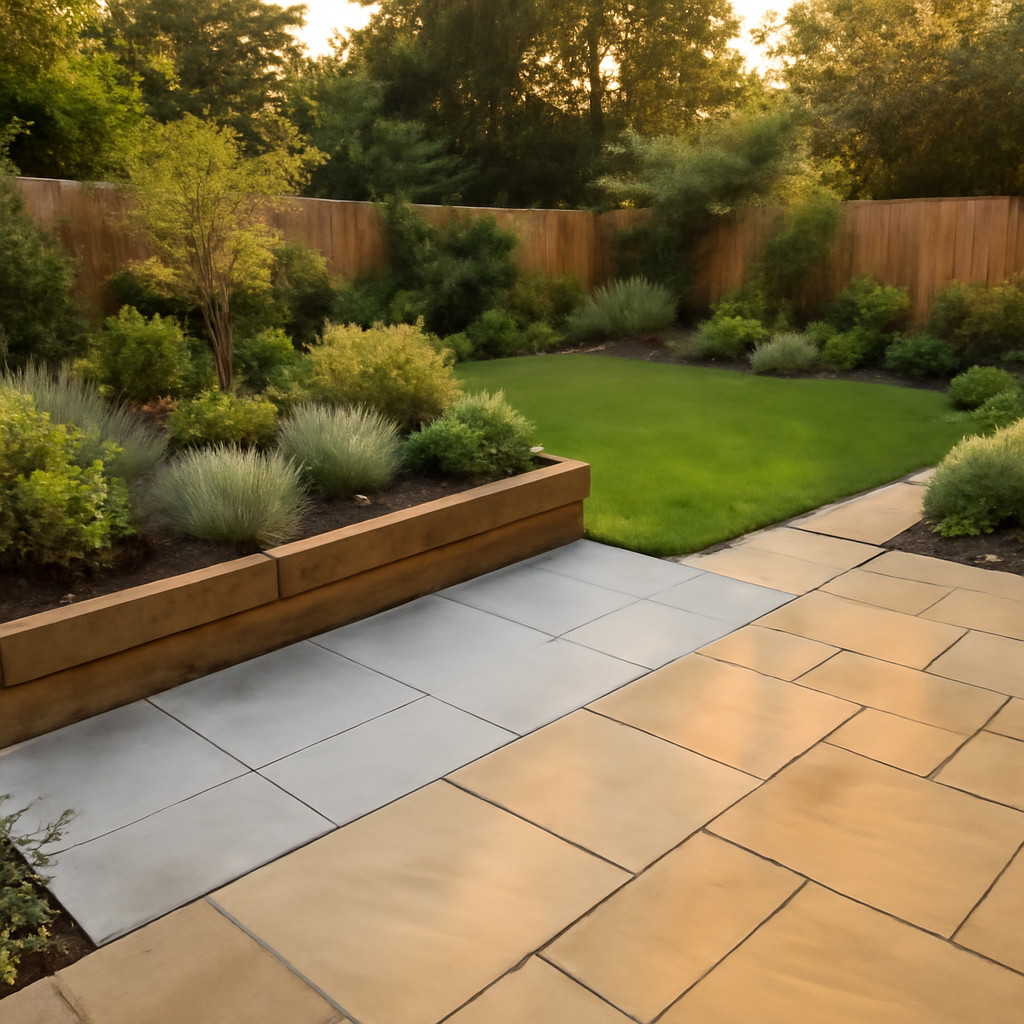
When planning a new garden patio or hard landscaping project in Loughborough or anywhere in the East Midlands, one common question we get is whether to choose porcelain paving or Indian sandstone. Both materials offer distinct benefits and costs, and understanding these can help you make a practical, informed decision for your outdoor space.
Starting with cost, Indian sandstone tends to be slightly less expensive than porcelain paving. Typical installed prices for an Indian sandstone patio range from £90 to £120 per square metre, assuming straightforward access and normal ground conditions. Porcelain paving generally costs more, from around £110 to £150 per square metre, due primarily to higher material prices and sometimes more complex installation requirements such as detailed cuts or falls. These are guide prices; final quotes will vary depending on site factors like access, drainage, levels, and material specifications.
Grip and safety are important, especially for families or if your garden is frequently wet. Indian sandstone offers a naturally textured surface which provides good grip even when damp. Porcelain, however, can vary by manufacturer - some options come with anti-slip finishes, but others can be quite smooth. If slip resistance is a priority, check the product details carefully and discuss this when arranging a site visit.
Regarding frost resistance, the East Midlands climate can be challenging. Indian sandstone is generally durable but being a natural stone, it may be more susceptible to frost damage if water freezes in its pores. Good installation with proper drainage can help prevent issues. Porcelain paving is fired at high temperatures, making it very dense and typically more frost resistant with lower water absorption. This can make porcelain a better choice in areas prone to freeze-thaw cycles.
Cleaning and maintenance should also be considered. Indian sandstone can naturally weather and develop a patina over time, which some homeowners appreciate for a rustic, aged look. However, it can stain and may require sealing and periodic cleaning to maintain its appearance. Porcelain paving is generally easier to clean thanks to its non-porous surface and uniform colour. It resists staining and can often be kept looking like new with basic cleaning.
Colour consistency is another key difference. Porcelain paving is manufactured, so the colour and finish are highly consistent across slabs, which suits contemporary garden designs favouring clean lines. Indian sandstone, being a natural material, varies in colour and patterning across batches. This can add character and a more organic feel, which works well with traditional or countryside landscaping styles common in the East Midlands.
So when does each material suit best? Indian sandstone is ideal if you want natural texture and a classic look that blends with the countryside character typical of many Loughborough gardens. Porcelain paving is preferable if you need a sleek, uniform finish that's easier to clean with strong frost resistance. Both require professional installation for best results, and practical considerations like drainage, access, and site preparation will affect your final choice and costs.
Worthington Landscape & Design specialises in landscaping and 3D garden design in the East Midlands, with local knowledge that helps match materials to your site and style. For a realistic quote and advice tailored to your garden, a site visit is essential. Factors like ground levels, sub-base preparation, falls for drainage, and slab specification all play a part in the final price and outcome.
If you're considering porcelain paving or Indian sandstone for your garden in Loughborough or wider East Midlands, WhatsApp Aaron on 07454 978031 for a site visit or quick quote. We’ll provide clear, straightforward advice based on experience and local conditions to help you achieve a garden you’ll enjoy for years to come.
WhatsApp Aaron on 07454 978031 to talk through a garden project.