When planning landscaping in Loughborough or anywhere in the East Midlands, choosing the right paving material is a key decision. Among popular options, porcelain paving and Indian sandstone stand out. Both have their strengths and considerations, especially when it comes to cost, grip, frost resistance, maintenance, colour consistency, and suitability for your garden's conditions.
Starting with cost, Indian sandstone is generally more affordable, with installed prices typically between £90 to £120 per square metre. This covers straightforward access and normal ground conditions but can increase with difficult site factors. Porcelain paving tends to be more expensive, ranging from £110 to £150 per square metre due to higher material costs and preparation work like cuts or ensuring proper falls for drainage. Final quotes always depend on your garden’s specifics, so a site visit is advisable.
Grip is an important factor, especially in our often wet East Midlands climate. Indian sandstone offers a naturally textured surface that provides good slip resistance, making it a safe choice for family gardens or areas around swimming pools. Porcelain paving has improved greatly in this area, with many options featuring anti-slip finishes, but the texture is generally smoother, so it’s worth asking about specific slip ratings.
When it comes to frost resistance, porcelain paving generally outperforms Indian sandstone. Porcelain is manufactured to be highly impervious to water, meaning it’s less likely to crack or suffer frost damage during East Midlands winters. Indian sandstone is durable too but being a natural stone, it can be more prone to frost-related issues if not properly installed with good drainage and sealing.
Maintenance and cleaning also differ. Indian sandstone ages naturally and will develop a patina over time, which many homeowners find attractive. However, it requires regular cleaning to prevent moss and algae build-up due to its porous nature. Sealing can help but needs to be reapplied periodically. Porcelain paving is non-porous, making it very easy to clean—usually just sweeping and occasional washing is enough—and it resists staining more effectively.
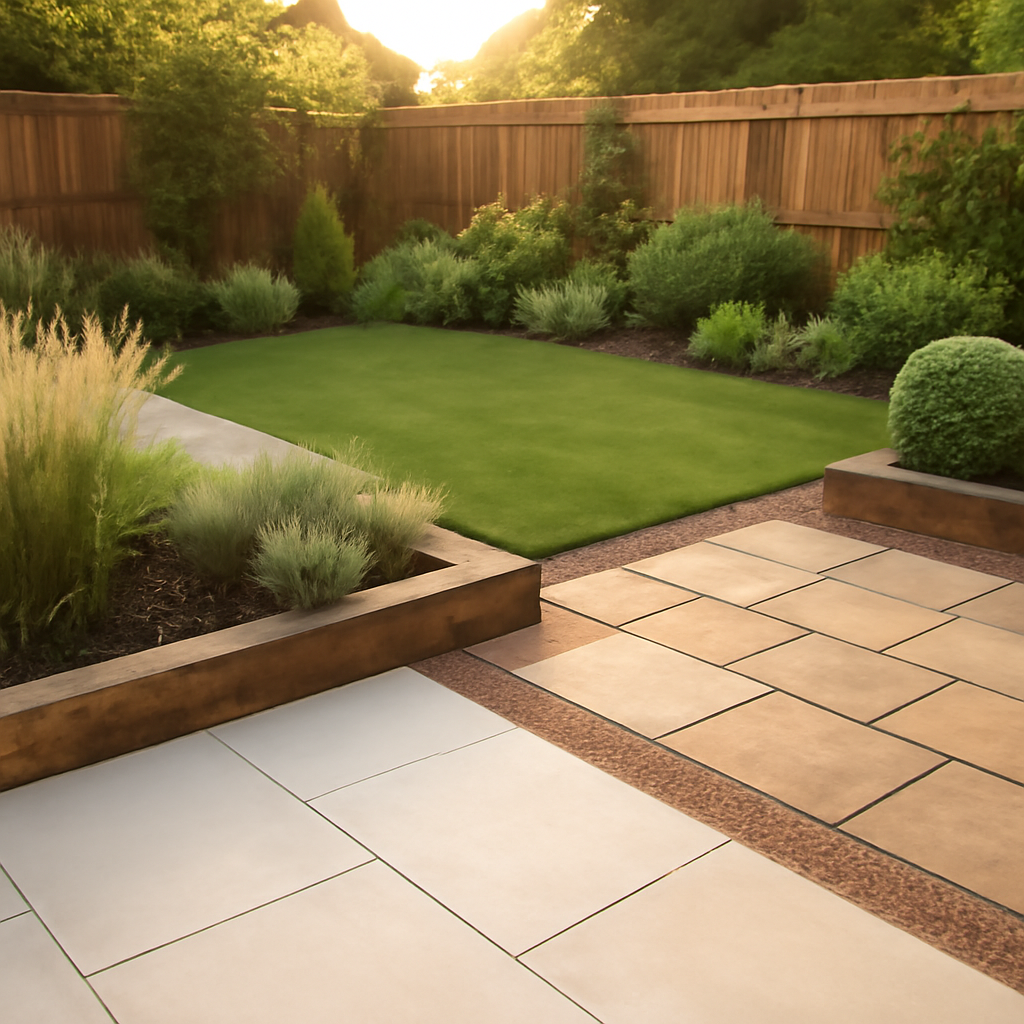
Colour consistency is a clear area where porcelain paving has the edge. Because it is manufactured, its colours and patterns are highly consistent from slab to slab, ideal for modern or contemporary garden designs where a uniform look is desired. Indian sandstone’s beauty lies in its natural variation, with unique veining and colour tones that can add character but may be less predictable in overall appearance.
Choosing between porcelain paving and Indian sandstone depends on your garden style, budget, and maintenance preferences. Porcelain suits sleek, modern designs and those wanting low upkeep with excellent frost resistance. Indian sandstone fits traditional or rustic gardens where natural texture and variation are appreciated, and a slightly lower upfront cost is important.
At Worthington Landscape & Design, we specialise in both materials and can help guide you based on your specific site conditions in Loughborough or the wider East Midlands. Factors like garden access, levels, drainage, and clearance all influence the choice and cost. For tailored advice and a practical assessment, a site visit is always the best approach.
If you'd like a quick quote or to arrange a site visit, WhatsApp Aaron on 07454 978031. We can offer straightforward pricing guidance and help you decide which paving material is the right fit for your garden’s landscape and lifestyle.
WhatsApp Aaron on 07454 978031 to talk through a garden project.