When planning a new patio or hard landscaping project in Loughborough or the wider East Midlands, choosing the right paving material is crucial. Porcelain paving and Indian sandstone are two popular options, each with its own strengths and considerations. Drawing on local experience, this guide compares these materials across key factors to help you make an informed choice.
Cost is always a practical concern. Indian sandstone patios typically cost between £90 and £120 per square metre, including installation under straightforward site conditions with normal ground levels. Porcelain paving tends to be pricier, generally falling between £110 and £150 per square metre. This higher cost reflects the material price and the extra care needed for cuts, falls, and preparation. Keep in mind that final quotes depend on site-specific factors such as access, ground levels, drainage, and material specification, so a site visit is often advisable.
Grip and safety are especially important here in the East Midlands, where wet weather is common. Indian sandstone usually offers good natural grip thanks to its textured surface, making it less slippery when wet. Porcelain paving is dense and smooth but many modern porcelain slabs come with anti-slip finishes to improve grip. However, some types of porcelain may be more slippery, particularly when wet or frosty, so selecting a suitable slip-resistant finish is essential.
Regarding frost resistance, porcelain paving tends to outperform Indian sandstone. Porcelain is impervious and non-porous, which means it doesn’t absorb water and so resists frost damage well. Indian sandstone, being a natural stone, is slightly porous and may suffer from frost spalling over time, especially if left untreated or in poor draining locations. With proper sealing and good drainage, Indian sandstone can still last many years in the East Midlands climate.
Cleaning and maintenance differs between these materials. Porcelain paving is easy to clean and stain-resistant due to its glazed surface, requiring only occasional washing to keep it looking fresh. Indian sandstone, as a natural stone, may need more regular maintenance, including sealing to protect against staining, moss, and algae growth in damp conditions.
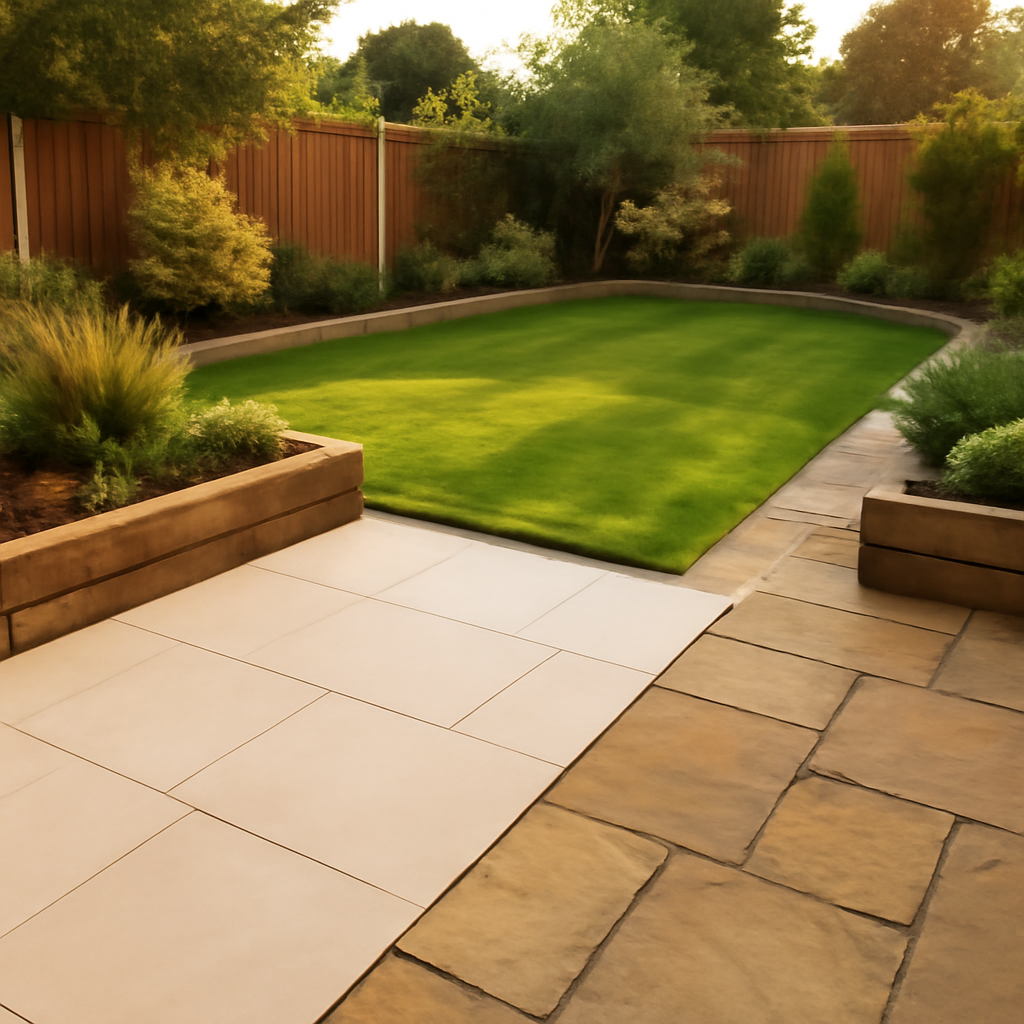
Colour consistency is another key difference. Porcelain paving offers uniform colours and patterns due to factory production, which helps achieve a sleek, modern look with consistent tones. Indian sandstone features natural variation and unique markings, offering a more traditional and organic appearance. This natural variation can add charm but some clients prefer the predictable, even finish of porcelain.
When deciding which material suits your project, consider the garden style and use. Indian sandstone works well in traditional or rustic gardens and suits uneven sites where a natural look is desirable. Porcelain paving fits contemporary spaces well and is excellent for clean, smooth surfaces and precise layouts. Both materials can complement railway sleeper raised beds, turfing, or block paving driveways, frequently used in East Midlands landscaping.
In summary, porcelain paving offers superior frost resistance, easier cleaning, and consistent colour, but at a higher cost. Indian sandstone provides natural grip, characterful aesthetics, and generally lower price points, but requires more maintenance and careful site preparation. Assess your practical needs, aesthetic preferences, and budget, and don’t hesitate to arrange a site visit for tailored advice.
If you’re considering a new patio or garden project in Loughborough or the East Midlands and need help deciding between porcelain paving and Indian sandstone, get in touch for a site visit or a quick quote. WhatsApp Aaron on 07454 978031 for straightforward, experienced advice and pricing tailored to your garden.
WhatsApp Aaron on 07454 978031 to talk through a garden project.