Choosing the right patio material is a key decision for any garden project in the East Midlands. With local climate conditions and style preferences in mind, I often get asked about porcelain paving versus Indian sandstone. Both are popular options here in Loughborough and the surrounding areas, so let's take a straightforward look at their differences, benefits, and pricing to help you decide.
Starting with cost, Indian sandstone patios generally cost between GBP 90 to GBP 120 per square metre. This is for straightforward access and typical ground conditions. Porcelain paving tends to be a bit higher at GBP 110 to GBP 150 per square metre, reflecting its material cost and the preparation needed, including cuts and falls. Keep in mind these are guide prices—your final quote will depend on factors like site access, existing levels, drainage, and exact specifications.
Grip and safety are important, especially for families or if your garden gets a lot of moisture. Indian sandstone usually offers a naturally textured surface that provides good slip resistance, making it a safe choice. Porcelain paving can vary widely here. Some porcelain slabs have a textured finish, but many are quite smooth and may become slippery when wet, so it’s important to choose anti-slip finishes if grip is a priority.
Frost resistance is another factor to consider given our East Midlands winters. Porcelain paving is typically very frost-resistant due to its dense, non-porous surface, reducing the risk of damage from freezing and thawing cycles. Indian sandstone is porous, so while it can handle frost, it may require sealing and occasional maintenance to minimise frost damage and staining over time.
When it comes to cleaning and upkeep, porcelain is usually easier to maintain. Its non-porous surface means dirt, algae, and stains sit on top and don’t penetrate, so regular sweeping and occasional washing with soapy water is usually enough. Indian sandstone’s porosity means it can absorb stains and dirt, which may require pressure washing and sealing to keep it looking its best.
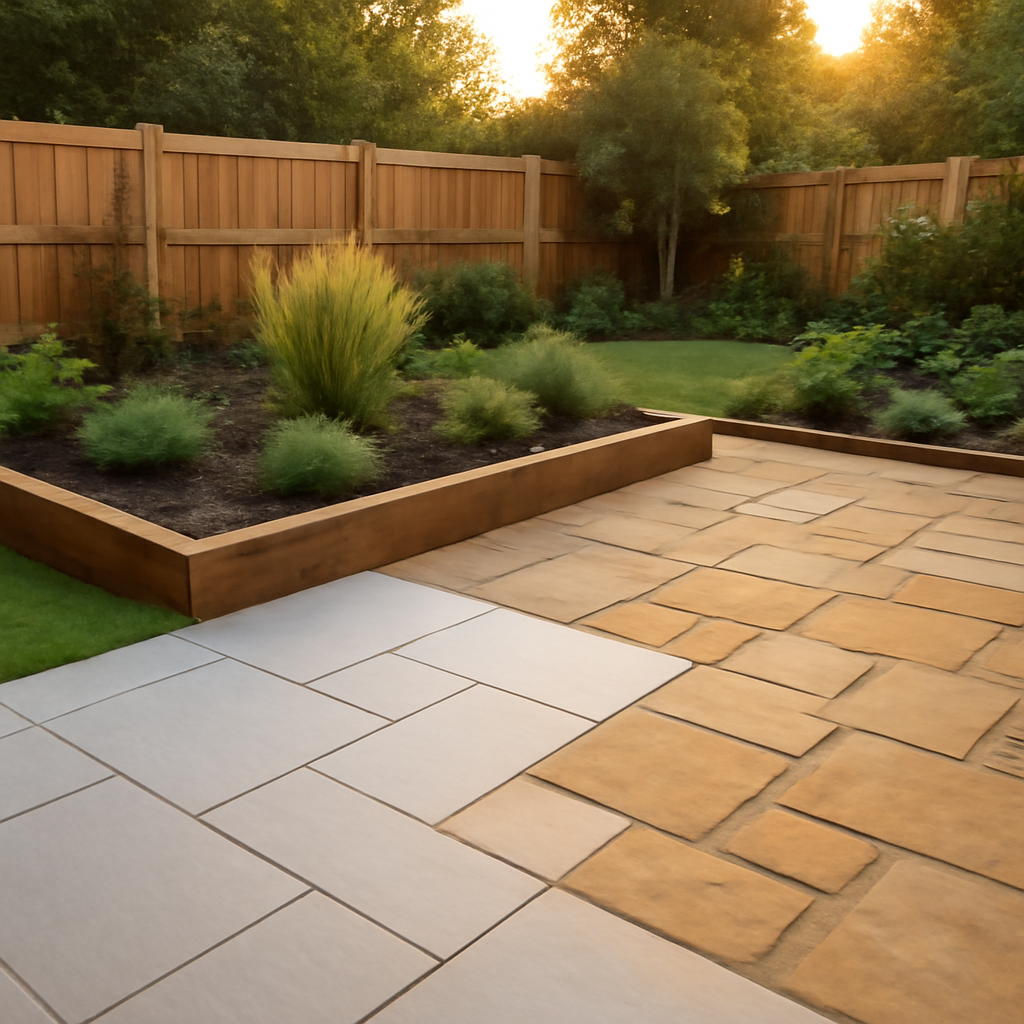
Colour consistency is where these materials really differ in style. Indian sandstone offers natural variation and warm, earthy tones that change over time, creating a rustic, organic look that suits traditional and country-style gardens well. Porcelain paving provides colour consistency and can mimic other finishes, offering a more modern, uniform appearance that works well in contemporary garden designs.
In terms of suitability, choose Indian sandstone if you prefer a natural, classic look with textural variety, especially for informal or heritage-style gardens common in the East Midlands. Porcelain paving suits well-drained, contemporary landscapes and is excellent where ease of maintenance and frost resilience are priorities.
If you’re considering your options for patios, driveways, or raised beds using railway sleepers, Worthington Landscape & Design can help with practical advice and tailored design service. We offer 3D garden design priced between GBP 150 to GBP 450 depending on garden size and revisions, helping you visualise before starting work.
To get a clearer idea of which material fits your garden and budget, I recommend a site visit. This allows assessment of your garden’s specific conditions like access, drainage, and levels, which all affect the final price. For a site visit or quick quote, WhatsApp me, Aaron, at 07454 978031—happy to help with your East Midlands landscaping needs.
WhatsApp Aaron on 07454 978031 to talk through a garden project.