
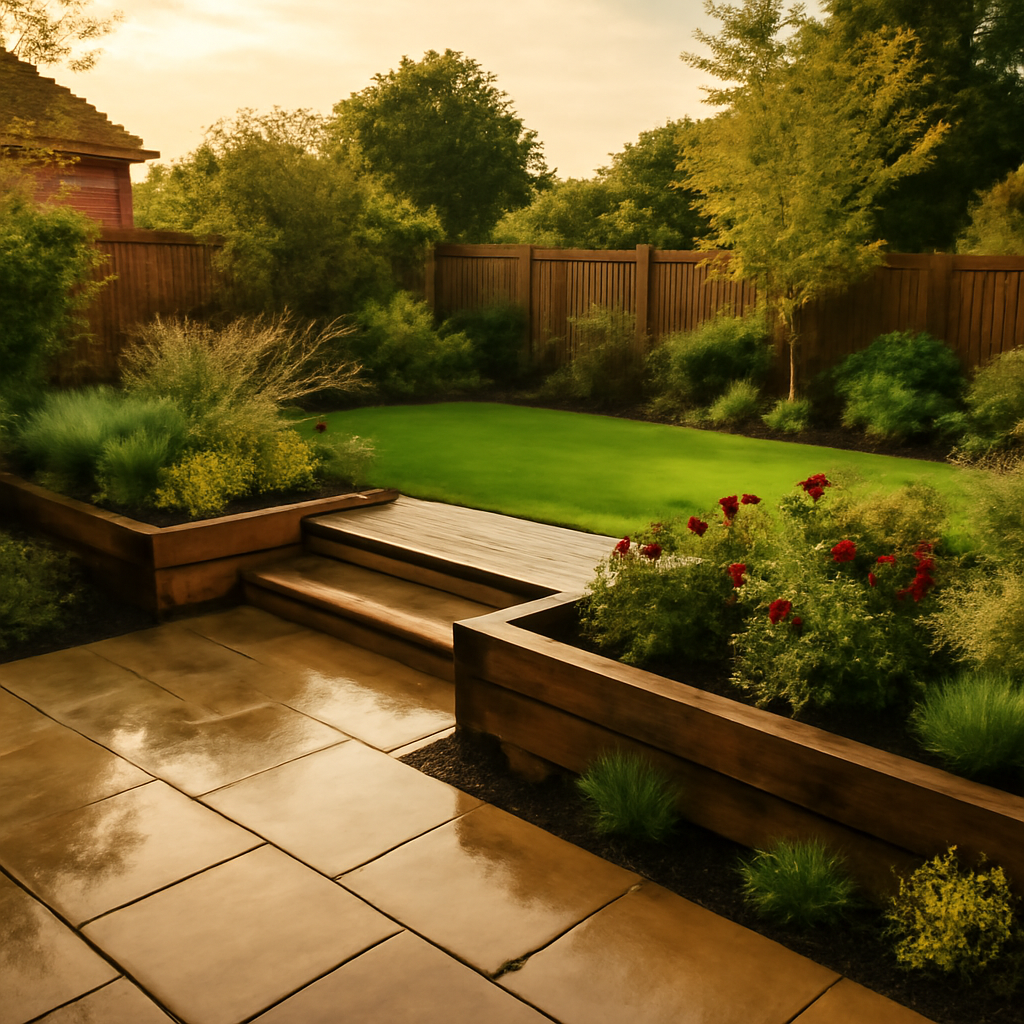
Landscaping projects often face challenges when the weather turns wet — a common concern here in Loughborough and across the East Midlands. As a sole trader offering practical landscaping and 3D garden design, I understand the importance of setting realistic expectations about what work can be done safely and effectively during damp conditions.
Firstly, ground conditions are key. Wet soil can become soft and muddy, making tasks like digging or heavy excavation risky because machinery and foot traffic may cause compaction or damage the surface. For this reason, major groundwork such as deep foundations or large scale clearance is often best postponed until the soil dries out or stabilises.
That said, some work is still possible in wet weather if ground protection is used. Temporary boards or matting can help spread weight and reduce soil disruption. For things like installing hard landscaping features, including patios and raised beds with railway sleepers, using protection under access routes will preserve the site and avoid costly repairs later.
Drainage considerations also take on greater importance during wet spells. Installing patios, for example, requires careful planning to avoid water pooling. Materials such as Indian sandstone (typically priced between GBP 90 and GBP 120 per sqm) and porcelain slabs (GBP 110 to GBP 150 per sqm) both need proper sub-base preparation and falls to channel water away. Work can continue, but be aware that wetter conditions may prolong installation times or require extra drainage solutions.
Concrete work can proceed in wet weather, but rain can affect curing times and surface finish. It’s important to cover poured concrete to protect it from excess water. Drainage details, substrate preparation, and weather protection all add to the complexity, so scheduling concrete for light rain days or when forecasts promise improvement is wise.
Block paving for driveways (usually costing GBP 80 to GBP 115 per sqm) is another task possible in damp conditions but with caveats. Soft ground makes laying bricks by hand tricky, and heavy rain can disturb sand beds before they’ve settled. Edging, excavation, and drainage needs all influence the final quote and timing. In wet weather, expect slower progress and sometimes the need for site visits to reassess readiness.
Installing railway sleeper raised beds (GBP 85 to GBP 140 per linear metre) can also be done since sleepers are fixed above ground. However, preparation like levelling or excavation might be challenging if the soil is saturated. Where possible, using sleepers on firm, well-drained ground is advisable to avoid future rot and settling issues.
Turfing is generally less successful in heavy rain; sods can smother or rot if the surface is waterlogged. Turfing costs range from GBP 18 to GBP 35 per sqm and assume prepared ground. Clearance, levelling, and topsoil supply are additional tasks that may need to be scheduled around weather conditions to ensure healthy grass establishment.
Finally, 3D garden design work is weather-independent since it’s digital and can be undertaken anytime at costs from GBP 150 to GBP 450 depending on garden size and revisions. Using design software early in the year allows you to plan patiently and start landscaping when the site conditions become manageable.
In summary, some landscaping tasks can continue in wet weather around Loughborough and the East Midlands if you allow for realistic timing, use ground protection, plan for drainage, and adjust customer expectations accordingly. For precise costing — which will depend on site access, ground levels, drainage needs, clearance, and material choices — a site visit is invaluable. To arrange a visit or a quick quote, WhatsApp Aaron on 07454 978031.
WhatsApp Aaron on 07454 978031 to talk through a garden project.