
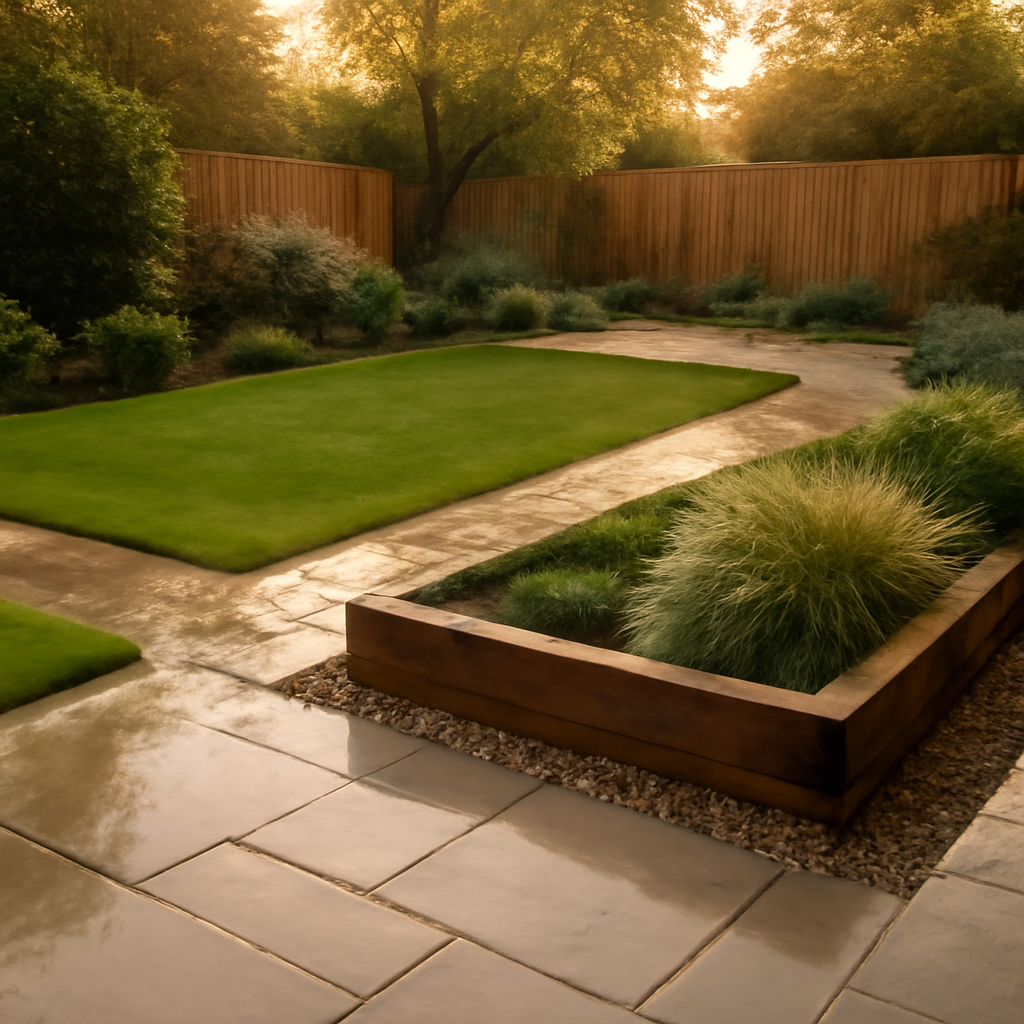
Landscaping in wet weather can be challenging, especially here in Loughborough and the wider East Midlands where rain is frequent. However, some types of garden work can still progress safely and effectively if the right precautions are taken. Understanding what’s realistic during damp spells helps manage expectations and avoid costly delays.
Firstly, heavy rainfall affects ground conditions significantly. Soft, muddy soil makes excavation, groundwork, and laying foundations for patios or driveways risky and less reliable. Working on wet soil may cause compaction or uneven settling later, which in turn affects durability. For projects like block paving or Indian sandstone patio installation, it’s best where possible to wait for a dry spell or at least stable, firm ground.
That said, some landscaping tasks can continue even when it’s wet. For example, constructing railway sleeper raised beds is often manageable provided there is good ground protection and suitable drainage. Sleeper walls don’t usually require deep excavation and can tolerate wetter conditions better than other hard landscaping elements. Prices for installation typically range from GBP 85 to GBP 140 per linear metre, depending on sleeper grade and site specifics.
Turfing or lawn installation is another task that can sometimes go ahead in wet weather, given that the ground is prepared and not waterlogged. Turf prices generally fall between GBP 18 and GBP 35 per square metre, though you should allow separately for clearance and levelling if needed. Avoid turfing when standing water is present to prevent poor root establishment.
Regarding patios, laying materials like Indian sandstone or porcelain slabs benefits from dry conditions to ensure proper bedding and alignment. Indian sandstone patios typically cost between GBP 90 to GBP 120 per square metre, while porcelain patios range from GBP 110 to GBP 150 per square metre, reflecting higher material costs and cutting requirements. Although wet weather slows progress, if slabs and sub-base materials are kept dry on-site and good drainage is planned, these projects may still proceed cautiously.
Drainage is crucial during wet weather landscaping. Any hard landscaping needs careful level planning and sometimes additional drainage solutions to avoid water pooling and damage. If your garden naturally holds water or slopes unfavourably, consider drainage improvements before laying patios or driveways. This can also affect final pricing and timelines during your project.
Concrete mixing and pouring are generally not recommended during heavy rain due to the risk of weakening the mix and causing surface issues. If you’re planning foundations or structural elements, it is advisable to schedule this work during drier periods. If unavoidable, ensure the concrete is protected immediately after pouring and discuss weather-related contingencies.
For customers considering a new garden layout or renovation, a 3D garden design can be commissioned anytime regardless of weather as it is digital. This service, priced between GBP 150 and GBP 450 depending on garden size and revisions, helps visualise your project clearly before any site work begins.
Ultimately, managing landscaping work in wet weather means balancing progress with protecting the ground, materials, and finished work quality. It’s important to allow for potential delays and additional preparation like temporary ground protection mats or drainage enhancements. A site visit is the best way to assess conditions and provide an accurate, tailored quote.
For practical advice specific to your garden’s condition or to arrange a site visit and quick quote, WhatsApp Aaron on 07454 978031. This helps ensure your landscaping project progresses smoothly no matter the season.
WhatsApp Aaron on 07454 978031 to talk through a garden project.