
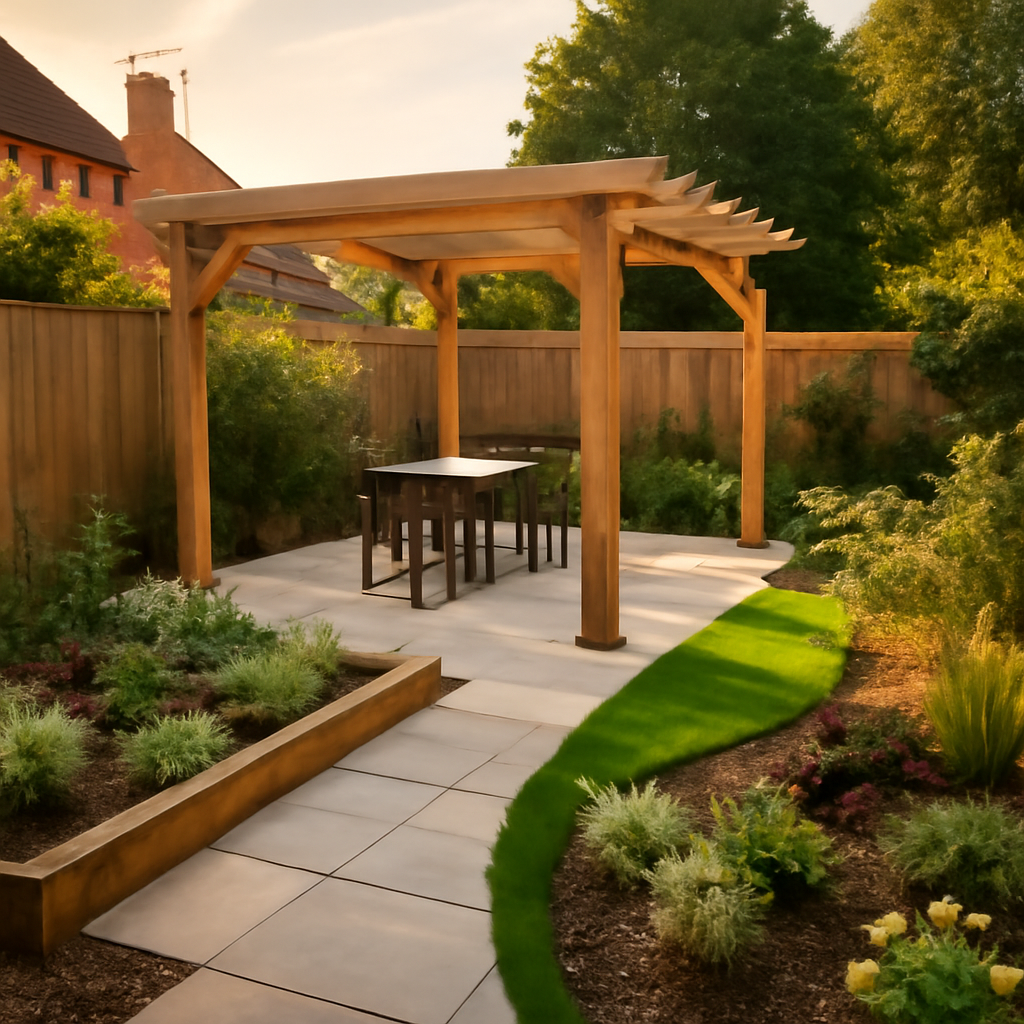
When deciding where a pergola should sit in a family garden, several practical factors come into play. A well-placed pergola not only enhances your outdoor space aesthetically but also adds functional value by providing shade, privacy, and a focal point for family gatherings. If you’re in Loughborough or the East Midlands area and considering landscaping work, understanding these basics can help you make the most of your garden.
Firstly, consider shade and sun exposure. A pergola is often designed to provide shelter from direct sunlight, so placing it where it can block the harsh afternoon sun is ideal—typically on the south or west side of the garden. However, you don’t want it in permanent shade unless you plan to use undercrofts like outdoor heating. Think about the path of the sun in your garden and choose a position that balances sunny and shaded areas for the family to enjoy.
Privacy is another key factor. Position the pergola so it shields your seating or dining area from neighbours’ views or street-facing sights. This may mean situating it toward the rear of the garden or using existing boundary screens and planting to create natural barriers. Railway sleeper raised beds or trellises with climbing plants around the pergola can further boost privacy without feeling enclosed.
Views from the house also influence the pergola’s location. Ideally, the pergola should be visible through French doors or large windows to extend your living space visually. Positioning it where you get pleasing garden views encourages more frequent use and connects indoor and outdoor living. Bear in mind that paving paths or patios should lead naturally from these access points for ease of movement.
Speaking of paving, the pergola base should sit on a level, stable surface, often an Indian sandstone or porcelain patio. Indian sandstone typically costs between GBP 90 to GBP 120 per sqm, while porcelain slabs are pricier, around GBP 110 to GBP 150 per sqm. Your choice affects not just aesthetics but also durability and maintenance. Consulting a professional can help determine the best material based on your garden’s existing condition and style.
Planting around the pergola can soften the structure’s look and integrate it naturally into your garden. Consider climbing plants like wisteria, clematis, or roses that can grow over the pergola to provide additional shade and colour. Raised beds made from railway sleepers, at GBP 85 to GBP 140 per linear metre, can add dimension and serve as practical, decorative borders around the pergola area.
Access to the pergola should be straightforward, with clear paths from the house or driveway to encourage family use. If you’re installing block paving for these paths or driveways, expect pricing around GBP 80 to GBP 115 per sqm, although this can vary depending on drainage and edging needs. Ensure the chosen spot doesn’t disrupt grassed areas earmarked for play or other activities.
Finally, every garden is different, and practicalities such as soil levels, drainage, electrical access for lighting, and local planning rules can all affect where a pergola can be placed and how it looks. A site visit is always advisable. Getting a 3D garden design, costing between GBP 150 and GBP 450 depending on garden size and complexity, can also provide valuable visual guidance before you commit.
If you are considering adding a pergola or other landscaping features in your garden, contact Worthington Landscape & Design for tailored advice. For a site visit or quick quote in Loughborough or the East Midlands, WhatsApp Aaron on 07454 978031. Final pricing depends on site conditions and specific project requirements, so an onsite assessment ensures an accurate quotation.
WhatsApp Aaron on 07454 978031 to talk through a garden project.